Load Carrier Management for Retail.
LCX NEXUS provides transparent control of Euro pallets and other load carriers across central warehouses, branch networks, suppliers, and logistics partners.


Why Load Carrier Processes in Retail are Complex.

High volumes of Euro pallets and other load carriers

Many locations, ramps, suppliers, and transport service providers

Varying quality requirements

Manual reconciliation for quantities, returns, and adjustments

Operational workload at receiving and loading docks

Lack of transparency regarding inventory and stock movements

Full Control Over Load Carriers.
For retail companies, LCX NEXUS makes it visible where load carriers are being moved, tied up, needed, or need to be physically balanced. The platform creates a unified data foundation for movements, inventory, quality, and balancing processes.
When physical balancing is required, LCX NEXUS handles the operational execution via a connected warehouse and transport network. This allows for the targeted organization of returns, provisioning, and balancing movements.

Ihre Vorteile
What retail companies gain with LCX NEXUS:

Transparency regarding movements, inventory, and quality

Fewer manual clarifications at the loading dock
Structured recovery and physical balance

Centralized control across locations and partners
Relieving the burden on transport service providers

Better data foundation for operational decisions
How Retailers use LCX NEXUS
Central warehouse
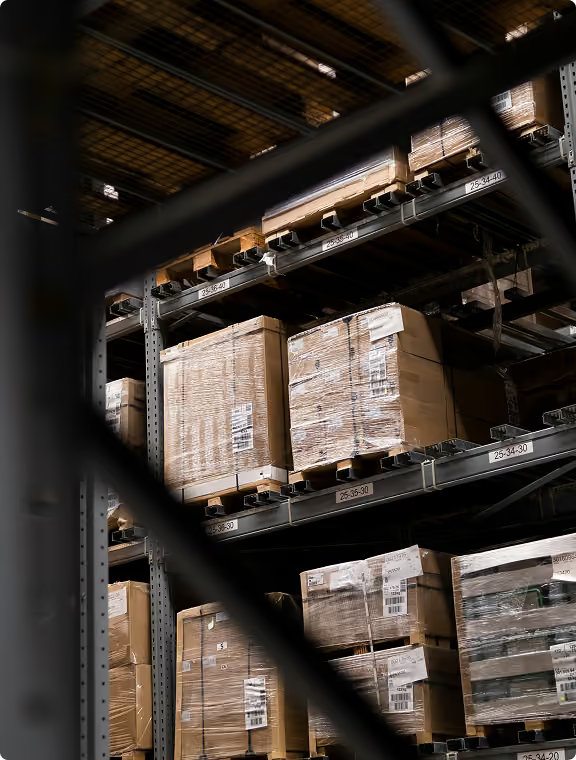
Transparency regarding incoming and outgoing load carrier movements – with documented quantities and qualities.
Branch network
Return requirements and balancing processes are managed centrally across all locations.

Supplier processes
A unified data foundation for movements between suppliers, retailers, and transport service providers.
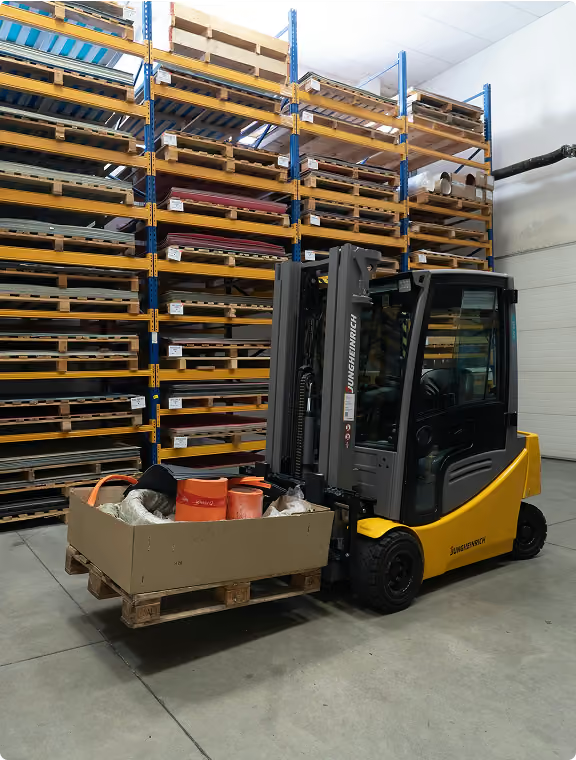
Physical balancing
LCX NEXUS handles deployment, returns, and consolidation – all through its own network.
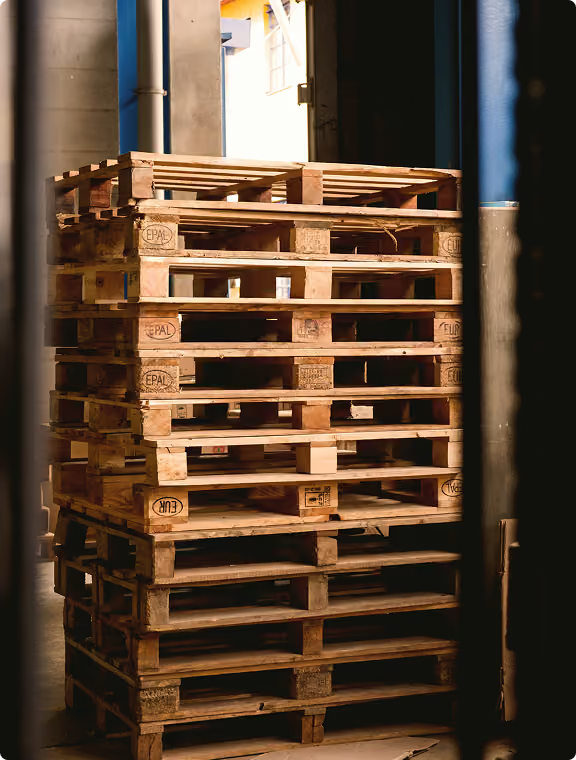
Alles, was Sie wissen müssen.
Finden Sie Antworten auf die häufigsten Fragen zu LCX NEXUS – von Plattformfunktionen und Integrationen bis hin zur Implementierung und dem erfolgreichen Einstieg.
Wie hilft LCX NEXUS dabei, Ladungsträger effizienter zu verwalten?
LCX NEXUS verbindet digitales und physisches Ladungsträgermanagement auf einer Plattform.Unternehmen erhalten vollständige Transparenz über ihre Ladungsträger, automatisierenProzesse und reduzieren manuellen Aufwand – unterstützt durch intelligente Software und KI.
Welche Herausforderungen löst LCX NEXUS im täglichen Ladungsträgermanagement?
LCX NEXUS hilft dabei, fehlende Transparenz zu beseitigen, Excel-Listen abzulösen, Abstimmungsaufwand zu reduzieren, Leerguttransporte zu minimieren, Kapitalbindung zu senken, Qualitätsprozesse zu vereinfachen und fundierte Entscheidungen auf Basis aktueller Daten zu treffen.
Warum unterscheidet sich LCX NEXUS von klassischen Palettenkontenoder Pooling-Anbietern?
LCX NEXUS ist keine einzelne Software und kein klassischer Pooling-Anbieter. Die Plattform verbindet digitales Clearing, physische Logistik, intelligente Automatisierung, Integrationen und KI in einem durchgängigen Netzwerk für modernes Ladungsträgermanagement.
Müssen wir unsere bestehenden Prozesse komplett umstellen?
Nein. LCX NEXUS integriert sich schrittweise in bestehende Prozesse und Systeme. Ziel ist es, vorhandene Abläufe effizienter und transparenter zu machen – nicht, sie unnötig zu ersetzen.
Lässt sich LCX NEXUS in unsere bestehende IT integrieren?
Ja. LCX NEXUS kann über standardisierte Schnittstellen in bestehende ERP-, TMS- und WMS-Systeme integriert werden und lässt sich flexibel an bestehende IT-Landschaften anbinden.
Funktioniert LCX NEXUS auch, wenn noch nicht alle Geschäftspartner teilnehmen?
Ja. LCX NEXUS schafft bereits dann einen Mehrwert, wenn noch nicht alle Geschäftspartner Teil des Netzwerks sind. Unternehmen können ihre Prozesse sofort digitalisieren und profitieren von mehr Transparenz sowie weniger manuellem Aufwand.
Geschäftspartner, die LCX NEXUS noch nicht aktiv nutzen, können als passive Teilnehmer in den Prozess eingebunden werden. Sie erhalten einen bedarfsgerechten, eingeschränkten Zugang und können so unkompliziert an gemeinsamen Abläufen teilnehmen, ohne die Plattform vollständig einzusetzen.
Mit jedem weiteren aktiven Partner wächst der Nutzen des Netzwerks – gleichzeitig profitieren jedoch alle Beteiligten bereits von Beginn an von effizienteren Prozessen und einer besseren Zusammenarbeit.
LCX NEXUS ist so konzipiert, dass Unternehmen nicht darauf warten müssen, bis ihr gesamtes Netzwerk digitalisiert ist. Sie können sofort starten und ihr Netzwerk Schritt für Schritt mitnehmen.
Ab wann lohnt sich der Einsatz von LCX NEXUS wirtschaftlich?
Unternehmen profitieren bereits früh von geringerem Verwaltungsaufwand, weniger Leerguttransporten, reduzierter Kapitalbindung und einer deutlich höheren Transparenz. Dadurch amortisiert sich die Einführung häufig schneller als erwartet.
Wie starten wir mit LCX NEXUS?
Der Einstieg beginnt mit einer persönlichen Analyse und einer Live-Demo. Gemeinsam entwickeln wir einen passenden Einführungsplan, begleiten die Integration und unterstützen den Rollout bis zum produktiven Betrieb.
How does LCX NEXUS help you efficiently coordinate branches, suppliers, and logistics partners?
How can we reduce the coordination effort with our suppliers?
Manage Retail Load Carrier Processes Centrally and Transparently.
Learn how LCX NEXUS supports retail companies with the exchange, management, and physical balancing of load carriers.